

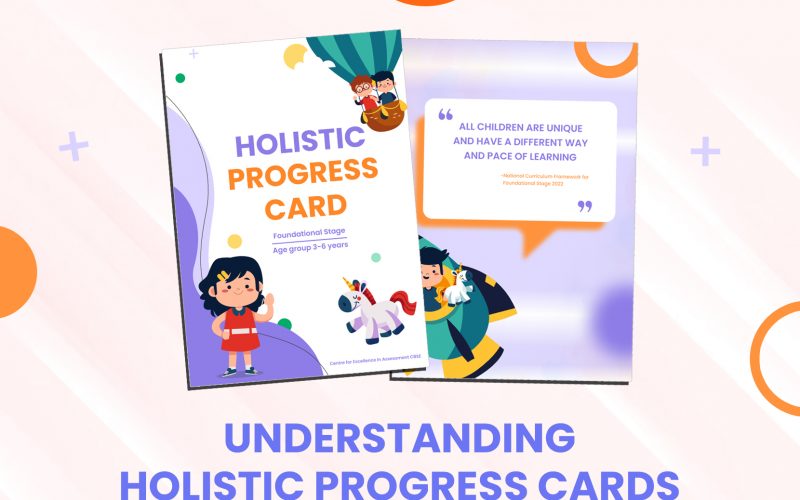
National Education Policy 2020 introduced the Holistic Progress Card (HPC) to understand and track the progress of students holistically. Schools often focus on just marks and at times, performance in sports. It proposed a different way of understanding student growth. As per the National Education Policy 2020, assessment must move from rote-based testing to competency-based evaluation. The policy clearly states that the traditional report card will be redesigned into a “holistic, 360-degree, multidimensional” progress card.
But what does that mean for teachers in real classrooms?
Why the Holistic Progress Card Was Introduced
For years, school report cards mainly reflected marks in subjects. However, teachers have always observed much more than that. They see confidence levels, creativity, leadership, empathy, resilience, and improvement over time. The Holistic Progress Card recognises these aspects. Under PARAKH, the national assessment centre set up by NCERT, the HPC framework supports:
- Competency-based assessment
- Continuous tracking of learning
- Focus on conceptual understanding
- Inclusion of cognitive, affective, and psychomotor domains
In simple terms, it shifts the focus from “How much did the child score?” to “How is the child growing?”
What Makes the Holistic Progress Card 360-Degree?
One of the most important features of the HPC is that it includes multiple perspectives.
1. Teacher Assessment
Teachers continue to play the most important role. However, instead of only giving marks, they also note skills and progress over time.
2. Student Self-Reflection
It helps students reflect on their own learning. This builds responsibility and awareness. Even simple reflections like:
- What did I improve this term?
- What was challenging?
- What goal do I have next?
3. Peer and Parent Inputs
The HPC framework allows space for peer feedback and parent observations. This strengthens the feedback loop and gives a fuller picture of the child’s development.
Importantly, the policy does not prescribe fixed labels like ranks or rigid percentages. Schools may use descriptive indicators aligned with competencies rather than marks alone. The focus is clarity of learning, not comparison.
How HPC Looks Across the 5+3+3+4 Structure
NEP 2020 reorganised schooling into four stages. The Holistic Progress Card adapts accordingly.
Foundational Stage (5 years including pre-primary to Grade 2)
Observations during storytelling, games, and classroom interaction become valuable evidence. Here, emphasis is on:
- Foundational literacy and numeracy
- Health and hygiene habits
- Social and emotional development
- Play-based and activity-based learning
Preparatory Stage (Grades 3–5)
Project work and classroom participation can be recorded in student portfolios. The focus expands to:
- Conceptual clarity
- Curiosity and questioning
- Teamwork
- Physical and creative activities
Middle Stage (Grades 6–8)
Here, competency-based learning becomes deeper. Assessments include projects, presentations, and practical activities.
- Critical thinking
- Application of concepts
- Problem-solving
- Exposure to vocational education
Secondary Stage (Grades 9–12)
The HPC may reflect:
- Analytical thinking
- Subject depth
- Career interests
- Internships or vocational exposure
The idea is readiness for higher education and life skills besides exam preparation.
Practical Ways Teachers Can Implement HPC
The transition does not require complex systems. It requires structured observation and provide evidence of learning progression
Maintain Student Portfolios
Collect:
- Written assignments
- Art work
- Project reports
- Photographs of activities
Keep Anecdotal Records
Short notes and observations help create meaningful progress comments.
- “Shows leadership in group tasks.”
- “Improved reading fluency over two months.”
- “Needs support in time management.”
Use Digital Tools Where Available
Many states are integrating student data with dashboards and platforms such as Vidya Samiksha Kendras to support monitoring. Digital repositories can reduce paperwork and improve tracking.
Addressing Parent Concerns
One challenge schools may face is explaining the absence of ranks. Parents often ask, “What percentage did my child get?”
The response must focus on growth. Explain that:
- Competency-based feedback shows strengths and areas of improvement.
- Descriptive reporting reduces unhealthy comparison.
- The approach supports student confidence and mental well-being.
Clear communication during parent-teacher meetings is essential.
The Bigger Purpose
The Holistic Progress Card is designed to make assessment meaningful, reduce exam pressure, and support every learner’s unique strengths. Teachers have always understood that children are more than marks. The HPC simply gives a structured way to record that understanding. If you think about your classroom today, you will probably identify one student who may not top the class but shows exceptional kindness, creativity, or persistence. That is the spirit of the Holistic Progress Card.