

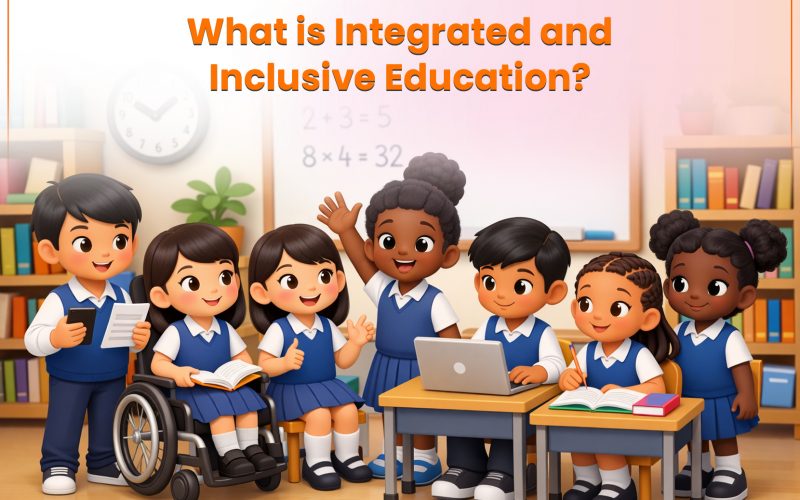
If you spend a little time in a classroom, one thing becomes clear very quickly. Every child learns differently. Some pick up ideas fast, some take their time. Some are comfortable speaking up, others prefer to sit back and observe. A good education system cannot treat all students the same and expect the same results. It has to recognise these differences and respond in a way that feels fair and supportive. This is especially important today, when classrooms are more diverse than ever. That is where integrated and inclusive education come into the picture. Both approaches focus on bringing children together in the same learning space. However, they differ in how they support students once they are there.
What is Integrated Education?
Integrated education is a system where students with different learning needs study in the same classroom. This often includes children with disabilities learning with their peers in mainstream schools. The goal is of it is to provide equal access to education by placing all students the same environment. It helps break the idea of separate schooling for children with disabilities and gives every child an opportunity to learn and grow together.
However, in most schools, the way of teaching remains unchanged. The curriculum and teaching methods are designed for the majority of the students and students who need extra support are expected to adjust to this setup. Even though support systems may be available, such as special educators or assistive tools. These can make a difference, but the actual classroom experience does not always change. Even with its limitations, integrated education plays an important role. It creates awareness, encourages social interaction, and helps build acceptance among students from an early age.
What is Inclusive Education?
Inclusive education builds on this idea but takes it further. It shifts the focus from the child adjusting to the system, to the system adapting to the child. In an inclusive classroom, teaching is more flexible. Teachers use a mix of methods such as visual aids, group activities, storytelling, and hands-on learning. This allows students with different abilities and learning styles to participate in a meaningful way.
Lesson planning also becomes more thoughtful. Instead of designing a lesson for an ‘average’ student, teachers consider a range of learning needs from the start. This reduces the need for separate support later. Inclusive education also places strong emphasis on emotional well-being. It aims to create a classroom where every child feels respected, confident, and included. This sense of belonging can have a lasting impact on a student’s overall development. It is not limited to disability but inclusive education also considers differences in language, background, learning pace, and even personality.
Key Difference Between Integrated and Inclusive Education
The main difference lies in who is expected to adapt. In integrated education, the student adjusts to the existing system. The classroom remains mostly the same, and additional support is provided when needed.
In inclusive education, the system adjusts to the needs of the student. Teaching methods, classroom practices, and even assessments may change to ensure that every learner can participate. This shift may sound simple, but it changes the entire learning experience. It makes classrooms more responsive and student-centred.
Why Inclusive Education Matters Today
The need for inclusive education is growing. Classrooms are no longer uniform spaces where all students have similar backgrounds or abilities. A single method of teaching cannot reach everyone effectively. Inclusive education helps address this gap. It encourages teachers to think differently about how they teach. It also creates opportunities for students to learn from each other.
Children who study in inclusive classrooms often develop better social understanding. They learn patience, empathy, and respect for differences. These are important life skills that go beyond academics. At the same time, students who need extra support feel more confident and engaged. They are more likely to participate and express themselves when they feel accepted. From a broader perspective, inclusive education supports the idea of equal opportunity. It ensures that no child is left out of the learning process.
Challenges in Moving Towards Inclusion
While the benefits are clear, implementing inclusive education comes with challenges. Schools may face limitations in terms of resources, infrastructure, or trained staff. Teachers may need additional support to manage diverse classrooms and design flexible lesson plans. Large class sizes can also make it difficult to give individual attention. In some cases, there may be a lack of awareness or understanding among parents and communities. Despite this, progress is being made. Many schools are gradually adopting inclusive practices. Even small steps, such as varied teaching methods or flexible assessments, can create a more supportive environment.
Integrated education opened the door by bringing students together. Inclusive education builds on that foundation by ensuring that every child can learn within that shared space. The focus now needs to be on creating classrooms that are adaptable and responsive. This does not always require major changes. It often begins with simple shifts in teaching and mindset. A teacher trying a different approach. A school recognising varied learning needs. A classroom where every child feels seen and valued. That is what meaningful education looks like today.